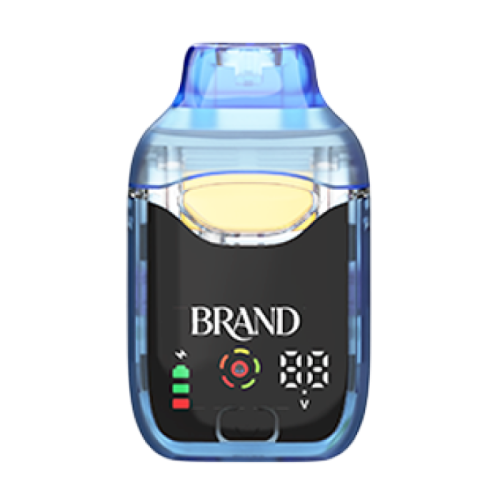
Leaks aren't always a hardware fault. After analyzing 12,000 returned units across 80 partner brands, we mapped the seven most common causes — and the fixes that actually work at the brand level.

When a brand's first complaint email lands in your inbox with the word "leaking" in the subject line, the temptation is to blame the hardware. Sometimes that's right. Most of the time, it isn't. Across the 12,000 returned units we've cross-sectioned in our QA lab over the last 18 months, only 14% of confirmed leaks traced back to a manufacturing defect. The other 86% were preventable — at the fill stage, the storage stage, or in customer education.
This guide walks through the seven causes we see most often, in order of frequency. For each one, we'll cover what's happening physically, how to verify it's the cause, and what to change in your process to stop it from happening again.
BEFORE YOU READ ON
If you're seeing a sudden spike in leaks from a single batch, jump straight to Cause #2 (tank seal failure) and Cause #7 (end-of-life seal degradation). Spikes are almost always one of those two.
An AIO is a closed system under three forces simultaneously: capillary pressure pulling oil through the wick, vapor pressure pushing back when the coil heats, and atmospheric pressure differentials when the device travels by air freight or sits in a hot warehouse. A leak is what happens when one of those three forces breaks the seal somewhere along the oil channel — typically at the wick, the mouthpiece junction, or the base plate.
The good news: every leak has a single dominant cause. Diagnose that and you fix the problem. Misdiagnose it and you'll keep replacing units that aren't actually broken.
By far the most common cause we see — about 31% of leak reports. Every cartridge or AIO tank is engineered around a specific viscosity range. Push thinner oil through a wick designed for thicker concentrate and you'll get capillary overflow within hours.
Run your oil through a viscometer and check it against the spec sheet for whatever device you're filling. If the reading sits below the recommended range, you have three options: thicken the formulation, switch to a wick with a smaller pore size, or move to a different cartridge format entirely.
When you see a sudden batch-wide spike in leaks, this is almost always the cause. A bad lot of o-rings, a slightly out-of-spec injection-molded gasket, or a contamination event during assembly will produce a population of devices that all fail the same way at roughly the same time.
"If you're seeing more than 2% leak rate on a single batch, stop selling that batch immediately and start the trace-back. The cost of one recall is always lower than the cost of a brand reputation rebuild."
DANIEL CHEN, HARDWARE ENGINEERING LEAD
Air freight cargo holds drop to -20 °C. Warehouse loading docks in Phoenix hit 50 °C. Oil contracts and expands across that range, and so do the polymers around it — but at different rates. Repeated thermal cycling fatigues seals long before any individual leak event happens.

Filling too fast traps air pockets. Filling too slow lets oil cool against the wick before settling. Both produce leaks, just on different timescales. The sweet spot for our standard 1.0 mL AIO is a fill rate of around 0.3 mL/sec at an oil temperature of 65–75 °C.
| TANK SIZE | FILL RATE | OIL TEMP | SETTLE TIME |
| 0.5 mL | 0.2 mL/sec | 65–70 °C | 4 min |
| 1.0 mL | 0.3 mL/sec | 65–75 °C | 6 min |
| 2.0 mL | 0.4 mL/sec | 70–80 °C | 10 min |
| 5.0 mL | 0.5 mL/sec | 70–80 °C | 15 min |
Less common since the move to factory-installed coils, but still happens with brands that are doing their own coil assembly. A coil that's even 0.2 mm off-axis breaks the wick-to-tank seal and turns capillary pull into capillary overflow. If you're hand-installing coils, invest in an alignment jig.
Leaks aren't always a hardware fault. After analyzing 12,000 returned units across 80 partner brands, we mapped the seven most common causes — and the fixes that actually work at the brand level.
Leaks aren't always a hardware fault. After analyzing 12,000 returned units across 80 partner brands, we mapped the seven most common causes — and the fixes that actually work at the brand level.
Leaks aren't always a hardware fault. After analyzing 12,000 returned units across 80 partner brands, we mapped the seven most common causes — and the fixes that actually work at the brand level.
Be the first to know about new drops, XH updates, and wholesale opportunities.